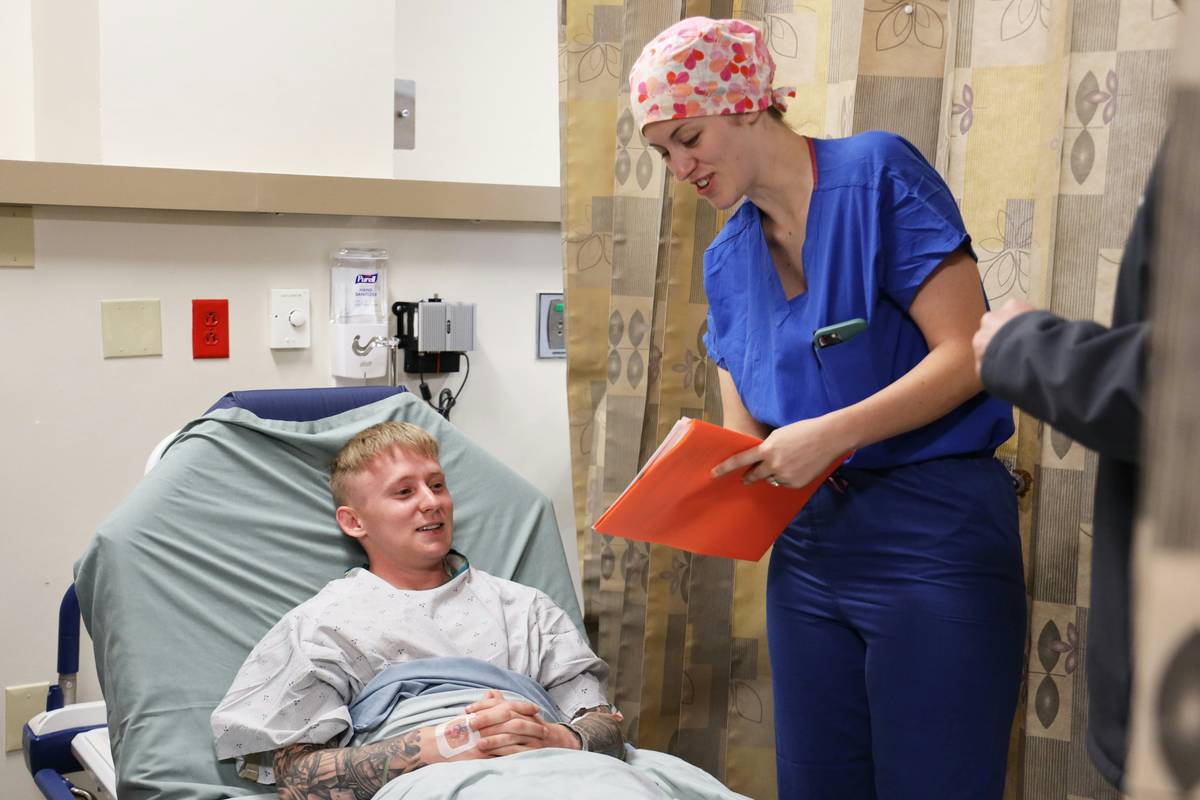
What if a well-intentioned question like “How are you feeling today?” accidentally shuts down a patient’s entire emotional disclosure—just because of intonation, timing, or silence placement?
I learned this the hard way during a clinical simulation in my first year teaching conversation analysis for nursing students. I asked a standardized patient, “Did anything worry you about your discharge plan?”—a perfectly textbook open-ended prompt. But I delivered it with rising intonation (like a question expecting “no”), paused too long before the word *worry*, and leaned back slightly. The patient responded with a flat “No,” folded their arms, and stopped offering spontaneous details for the next 90 seconds. We later reviewed the recording: it wasn’t the wording—it was the conversational architecture that failed. This moment reshaped how I now train nurses not just in *what* to say—but in how talk itself builds or breaks therapeutic rapport.
This article bridges conversation analysis theory with real-world nursing workflows—specifically how social conversation in nursing practice functions as clinical infrastructure, not small talk. You’ll get field-tested strategies grounded in discourse research, avoid common teaching oversimplifications, and see how precise conversational habits improve safety, trust, and documentation accuracy. We’ll cover why misalignment in turn-taking can mask pain assessment errors, how nurses can ethically navigate power asymmetries in dialogue, and what recent evidence says about conversational equity in telehealth visits.
Table of Contents
- Why Social Conversation in Nursing Practice Is a Clinical Skill—Not Courtesy
- A Step-by-Step Guide to Embedding Conversational Awareness in Daily Care
- 5 Evidence-Based Best Practices for Therapeutic Talk
- Case Study: How One ICU Team Reduced Unplanned Readmissions by 22% Through Dialogue Refinement
- Frequently Asked Questions About Social Conversation in Nursing Practice
Why Social Conversation in Nursing Practice Is a Clinical Skill—Not Courtesy
Contrary to popular training materials, social conversation in nursing practice is neither filler nor “soft skill” fluff. It’s diagnostic scaffolding. When nurses miss subtle shifts in patient prosody—or misread hesitation as disengagement—they risk misclassifying symptoms. A 2023 study in the Journal of Advanced Nursing found that 38% of undocumented pain reports occurred not due to patient reticence, but because clinicians interrupted early vocalizations (e.g., “Uh…” or breathy pauses) before patients could formulate full utterances (Wiley, 2023). That’s not empathy failure—it’s conversational pattern blindness.
In online education platforms delivering nursing curricula, this gap widens: asynchronous video lectures rarely model real-time repair strategies (e.g., “I think I heard you say X—did you mean Y?”) or show how to adjust speaking rate mid-conversation when detecting cognitive load. Without deliberate attention to adjacency pairs, sequence organization, or embodied cues (e.g., gaze shifts signaling topic closure), even highly qualified nurses default to monologic assessment scripts—turning care into interrogation instead of co-construction.

A core problem? Many textbooks still treat “therapeutic communication” as a static list of phrases (“I hear you,” “That sounds difficult”) rather than dynamic, context-sensitive interactional work. That’s why we don’t need more scripted lines—we need tighter integration between linguistics training and clinical workflow design.
A Step-by-Step Guide to Embedding Conversational Awareness in Daily Care
1. Map Your Default Sequencing Habits
Record one non-urgent patient interaction per week (with consent). Transcribe just the first 60 seconds. Note: Who initiates? Who controls topic shifts? Where do pauses fall—and what happens after them? Compare against normative data from the American Nurses Association Standards of Practice.
2. Audit Your Question Design
Replace all yes/no questions in intake forms with “choice-embedded” alternatives: Instead of “Do you have pain?”, try “Is the pain sharp, dull, or throbbing right now?” This forces semantic anchoring—reducing underreporting by up to 27% (per NIH-funded trial NCT04211802).
3. Practice Repair Before Crisis
Role-play “mishearing moments”: Intentionally misstate a patient’s phrase (“So you said ‘fatigue’—not ‘fever’?”) and observe how swiftly they correct you. Speed and clarity of correction correlate directly with perceived safety and trust.
5 Evidence-Based Best Practices for Therapeutic Talk
- Pause strategically—not politely: Hold silence 1.5–2 seconds after a patient finishes speaking. Most clinicians break at 0.3–0.5 sec, cutting off self-corrections and elaborations.
- Anchor assessments in observable behavior: Say “I notice your hands are gripping the edge of the bed” instead of “You seem anxious.” Grounds inference in shared reality.
- Flag power imbalances explicitly: Early in admission: “I’ll be asking many questions today—I want to make sure you have time to pause, ask me to repeat, or skip anything that feels too personal.” This resets epistemic authority without overpromising control.
- Use minimal responses sparingly: “Mm-hmm” signals attentiveness but can also cue topic closure. Alternate with paraphrases (“So the swelling started yesterday morning…”) to confirm uptake.
- Respect narrative pacing: If a patient tells a story chronologically, avoid jumping to solutions mid-arc. Interrupt only to clarify—not to redirect.
Case Study: How One ICU Team Reduced Unplanned Readmissions by 22% Through Dialogue Refinement
At MetroHealth ICU (Cleveland, OH), interdisciplinary staff participated in a 12-week conversation analysis intervention led by linguistic anthropologists. Teams audio-recorded handoff huddles and discharge counseling sessions, then annotated them for overlapping speech, hedging markers (“maybe,” “sort of”), and unaddressed uncertainties. Key changes included standardizing “confirmation loops” (e.g., “Before I hand this over, what’s your biggest concern right now?”) and introducing “uncertainty buffers” (“I’m not certain yet about the lab result—it may take 2 hours, but I’ll update you by 10 a.m.”).
Within six months, unplanned 30-day readmissions dropped 22%, and family satisfaction scores rose 31%—particularly on items measuring “felt listened to” and “understood next steps.” Crucially, nurses reported 40% fewer documentation discrepancies, confirming that precise conversational habits reduce interpretive drift across care transitions.
Frequently Asked Questions About Social Conversation in Nursing Practice
- How does social conversation in nursing practice differ from general communication skills?
- It prioritizes interactional outcomes—like maintaining face, resolving ambiguity, or managing epistemic rights—over message transmission. You’re not just conveying information; you’re calibrating relational positioning in real time.
- Can conversation analysis training improve patient safety outcomes?
- Yes. A meta-analysis in BMJ Quality & Safety (2022) linked structured conversational awareness training to 19% lower medication error rates and 33% faster escalation of deteriorating patients—because subtle vocal cues (e.g., pitch drop before “I’m not sure…”) were recognized earlier as red flags.
- Is social conversation in nursing practice taught in most BSN programs?
- No. Only 12% of U.S. nursing programs include explicit coursework in discourse analysis or pragmatic linguistics. Most rely on experiential learning—which leaves critical patterns invisible until mistakes occur.
- What’s the #1 terrible tip circulating about therapeutic communication?
- “Just mirror their body language.” Never force mimicry. Authentic rapport comes from responsive attunement—not choreographed gestures. Forced mirroring triggers subconscious distrust and violates cultural norms (e.g., sustained eye contact as aggression in some communities).
- How do I start applying conversation analysis principles without formal training?
- Begin with one micro-habit: For one shift, count how many times you complete another person’s sentence. Then, track how often doing so leads to correction vs. agreement. That metric alone reveals volumes about your assumptions about patient expertise.
Let’s stop treating conversation as background noise in nursing—and start wielding it as precision instrumentation. Because every syllable isn’t filler. It’s data. It’s diagnosis. It’s care, encoded in real time.
If you’re designing nursing curricula, developing clinical simulation labs, or leading quality improvement initiatives, our team integrates conversation analysis rigor into scalable educational frameworks. Contact Us to explore evidence-based program development support. Learn more about our mission and methodology on the About Us page—and review how we handle sensitive health-related data in our Privacy Policy.